Pula, Croatia 12 – 16 October 2022
A Blog by Brian Carson
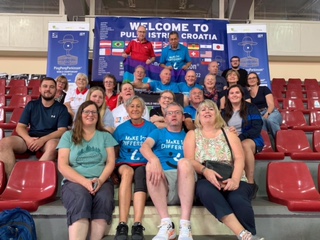
This years world championships took place in Pula in Croatia over 5 days. This blog is a description of my experience of the event. I was fortunate enough to attend and play as a member of a UK group of 11 players, 8 from England and 3 from Scotland. Additionally we had a total of 14 supporters accompanying us including my son and daughter and future son in law. This allowed us to have a family holiday around the competition
The tournament had a total of 165 participants, 107 men and 58 women from 19 countries.

Pre Tournament Preparation
I usually go into some intense training for these competitions in the weeks before, increasing my weekly TT sessions from 4 or 5 a week to 6 + a week across the three clubs I play in, South Ayrshire, Knightswood and Drumchapel., in addition to some practice at home.
However this time I actually reduced my playing time rather than increase it as I have recently had a hernia diagnosed and I have been carefully managing my playing time to give myself the maximum opportunity to be able to play in Croatia and be as competitive as possible.
This has also meant reducing other activities and I have kept away from walking football for a few weeks and scaled down my Pilates and PD Exercise with the help of both instructors.
Tuesday 11 October
We arrived in Pula early afternoon after an overnight stop in London. This was necessary due to limited flight options from Scotland. The UK team travelled separately from various locations and arrived at various times with some of the group travelling early to take advantage of the great weather and location for some pre tournament holiday time.
The competition dates were changed a few months before due to a clash with another TT event and this late change caused some delay in clarifying some specific event information until very near the start date. This impacted travel and accommodation arrangements for a lot of participants, and in my view resulting in groups being located at multiple locations around the area and making the social side of the event more challenging. At previous events we would be accommodated at a few specific hotels which helped us easily integrate socially. That is not to say we didn’t meet up and have some great social time.
Our first “event” was Tuesday evening and was a cocktail party at a beach bar where the majority of the players and their families and supporters got together to catch up. As I always say this is a great opportunity to come together as an international Parkinson’s community and catch up with old friends from previous events and meet new friends who are first time attendees at one of these competitions. For me personally this was a chance to catch up with my doubles partner Christoph Freyburg from Cologne, who I had not seen since we played together in Berlin in September 2021 although we keep in touch regularly.
Lars Rokitta thank you for giving me the photograph of you and I together in Portugal.
This was an early evening event and on completion a large number of volunteers went to the arena (the Mate Parlov Sports Centre) at the request of the organisers to help set up for the competition, assembling tables and barriers etc.
Wednesday 12 October Day 1
We had a couple of hours on the practice tables in the morning preparing for the competition start. I had a good session with my mixed doubles partner Joy Paul and it was great to get some practice time with my men’s doubles partner Christoph.
In the afternoon we attended the opening ceremony in the Roman Amphitheatre which was both unusual and fascinating to have this type of event in such surroundings. Although we were told it is used often for concerts so was probably not so unusual for the locals.
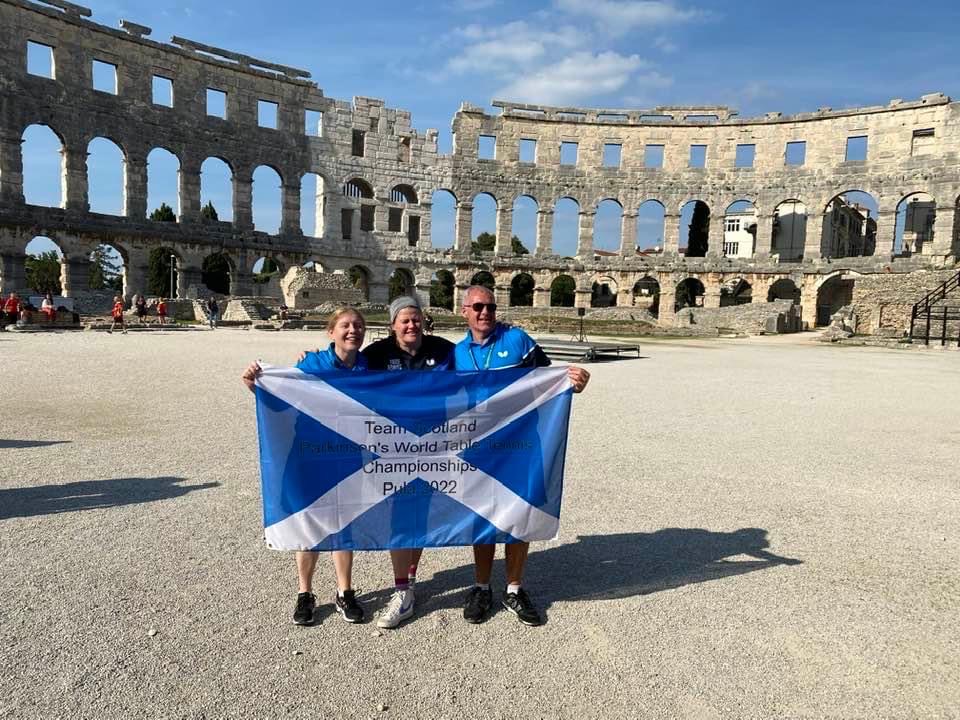
Then late afternoon down to business as the mixed doubles competition commenced.
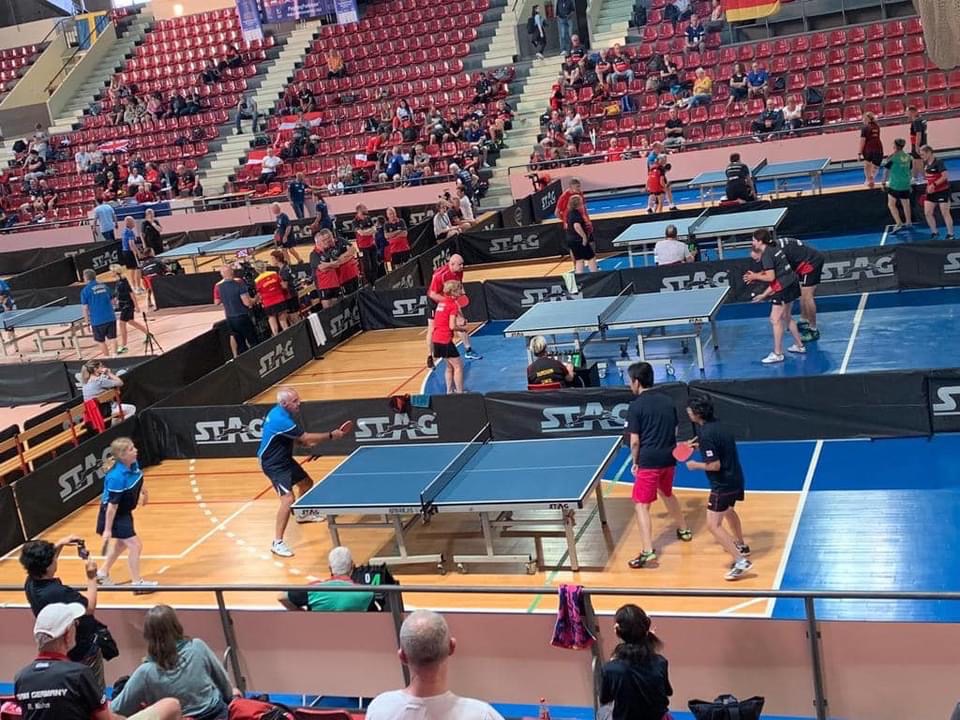
There were 5 competitions in total. Men’s singles and doubles, ladies singles and doubles, and mixed doubles. Each of the five competitions has three separate classification groups meaning there were fifteen separate competitions taking place.
Classification allocation is determined using a complicated questionnaire completed by each player and includes information about their Parkinson’s, time since diagnosis, severity of symptoms etc, as well as TT ability and level of participation where they normally play at home in clubs or groups.
There is usually an appeals procedure to allow allocation of classification to be challenged or clarified but I am not aware of any official responses to challenges made for this event.
All competitions were started in group format with the qualifiers moving on to knockout rounds through to a final. Similarly those who did not qualify moved on in a parallel consolation knockout competition which concluded with a consolation final.
My partner in this completion was Joy Paul who plays at South Ayrshire TT Club. Matches started at 17:00 and we were included in the class 1 competition, despite both being assessed as class 2 players for the singles competitions. This gave us quite a challenge and despite some great games we failed to qualify from our group, playing some tough opponents including the No1 seeds.
Thursday 13 October Day 2
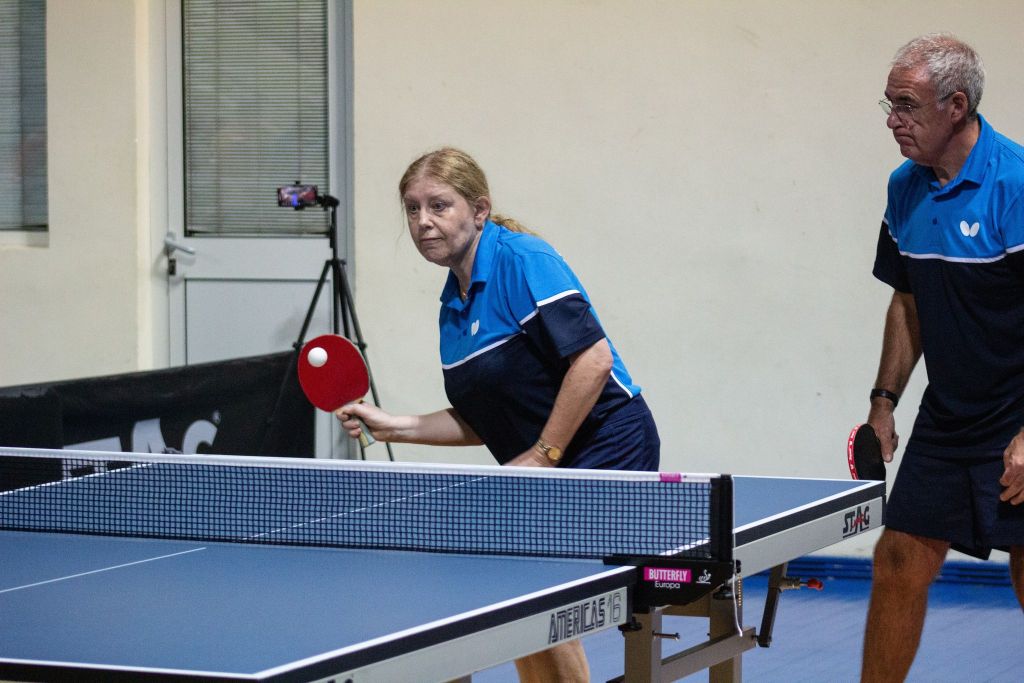
Play commenced in the men’s singles with all group matches played to determine who moved forward to the knockout stages in all classes. I was playing in class 2 and had a successful day finishing second in my group and qualifying for the knockout rounds on Saturday. My group contained players from the USA, Germany and Israel. As always I get a bit nervous when starting these matches, particularly the first one but this time I was much calmer than usual and hopefully this was reflected in my play.
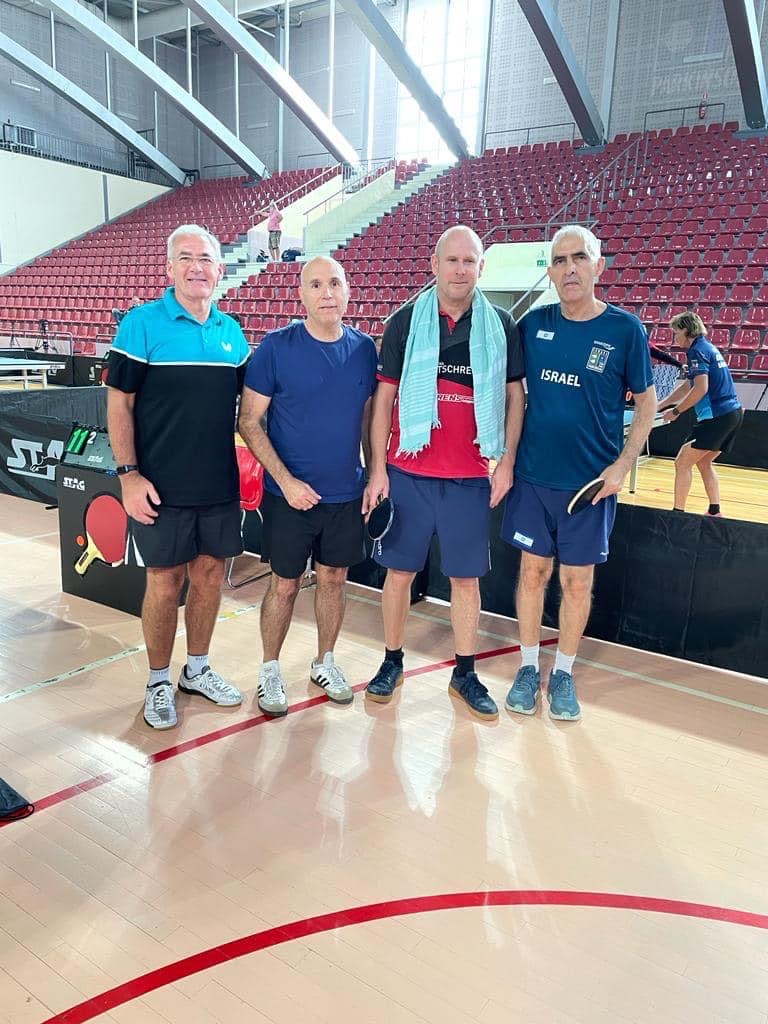
Friday October 12th Day 3
Christoph Freyberg and I began our doubles campaign, hoping to continue our success in Berlin last year where we won a bronze medal in the category. We were in a tough group that included the number one seeds as well as the current world champions who we lost to in last years semi final. Again we were both class 2 singles players who were entered in the class 1 competition. I am aware this may sound like sour grapes but it would help everyone if the organisers responded to questions and challenges on classification allocation. Unfortunately the other teams were just too good for us and we could not qualify for the knockout stages, moving on instead to the consolation rounds. It was great to see Christoph again and to play with him as he’s has not been able to make any other competitions this year due to ill health.
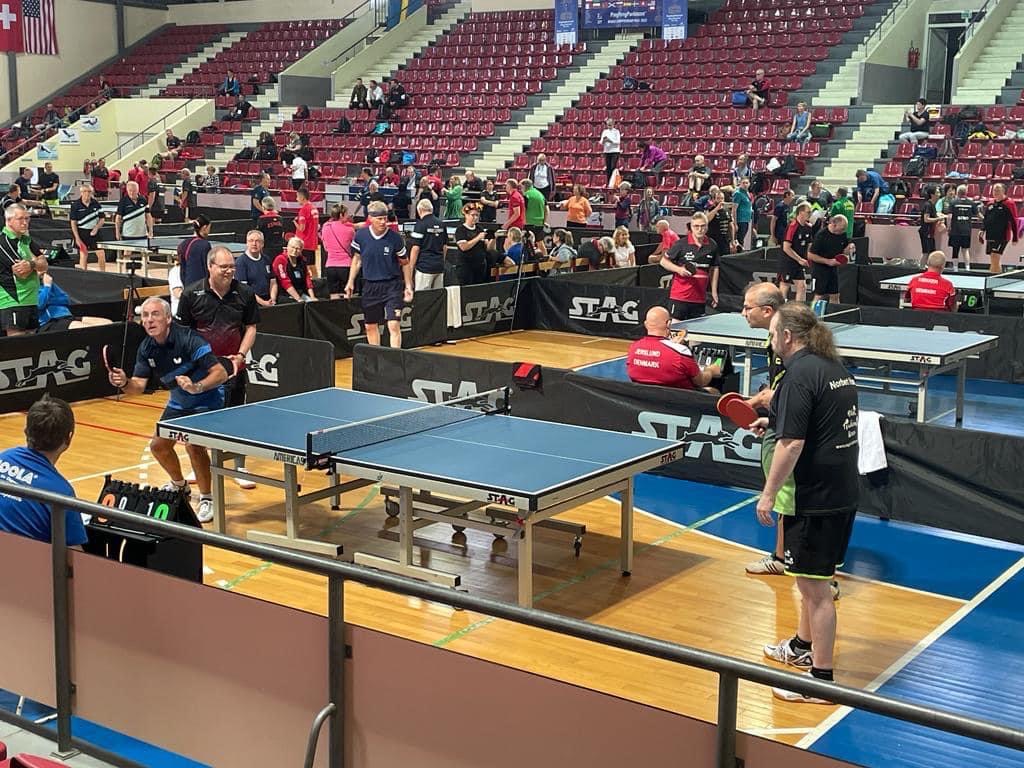
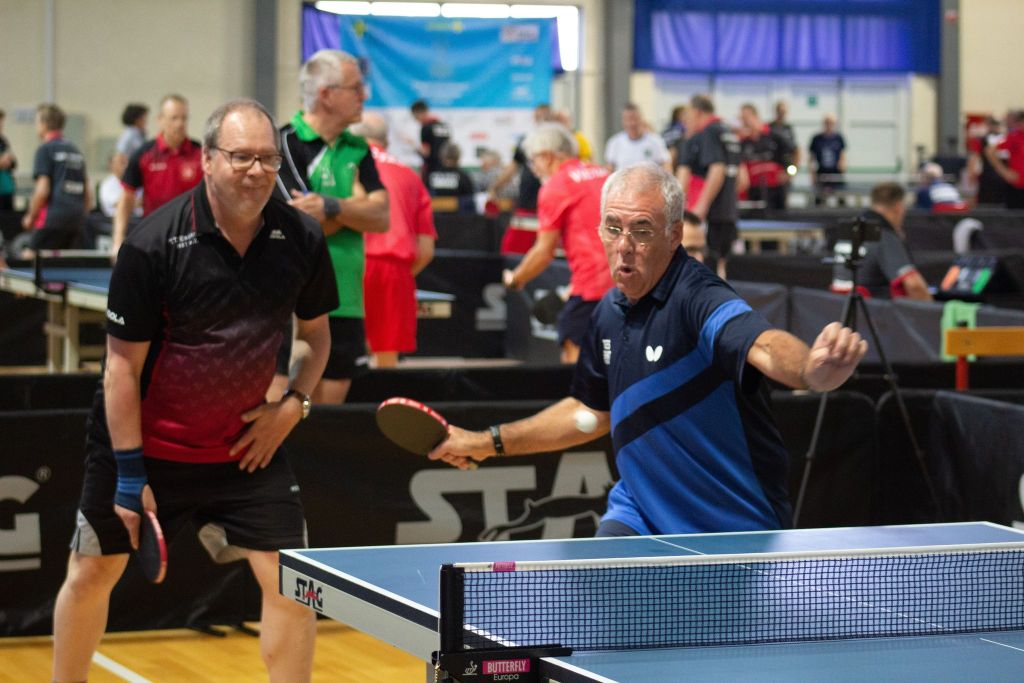
I spent 2 hours in the early afternoon as a volunteer umpire officiating 6 matches in the ladies doubles competition group stage. Challenging to say the least as some of the players were quite competitive (argumentative).
There were no official umpires provided by the organisers and we were relying on the goodwill of other players, supporters and coaches to umpire all matches.
Later in the afternoon Joy and I played in the mixed doubles consolation round but we were not able to progress.
Saturday October 13th Day 4
The men’s singles knockout competition started with all rounds up to quarter final taking place. The semi finals and finals were scheduled for Sunday morning. In the morning I played in the first knockout round of the men’s class 2 singles. I played against the current German Open Champion and we had a great 5 set match. I took the first 2 sets but he came back in the next two forcing a tense final set which I won to go through to the round of 16. The vocal support from the side lines was a big factor in getting me through this match.
Next I played against a French player who had won his group and went straight into this round along with some other group winners by-passing the previous round. An awkward player with bat rubbers that made it hard to read the ball and I narrowly won the first game after a deuce. The next two games were more comfortable for me as I adapted my game to counter his play and secure a 3- 0 win. I also got some sound coaching advice from one of the UK players after the first set. Thanks to John Hughes for that.
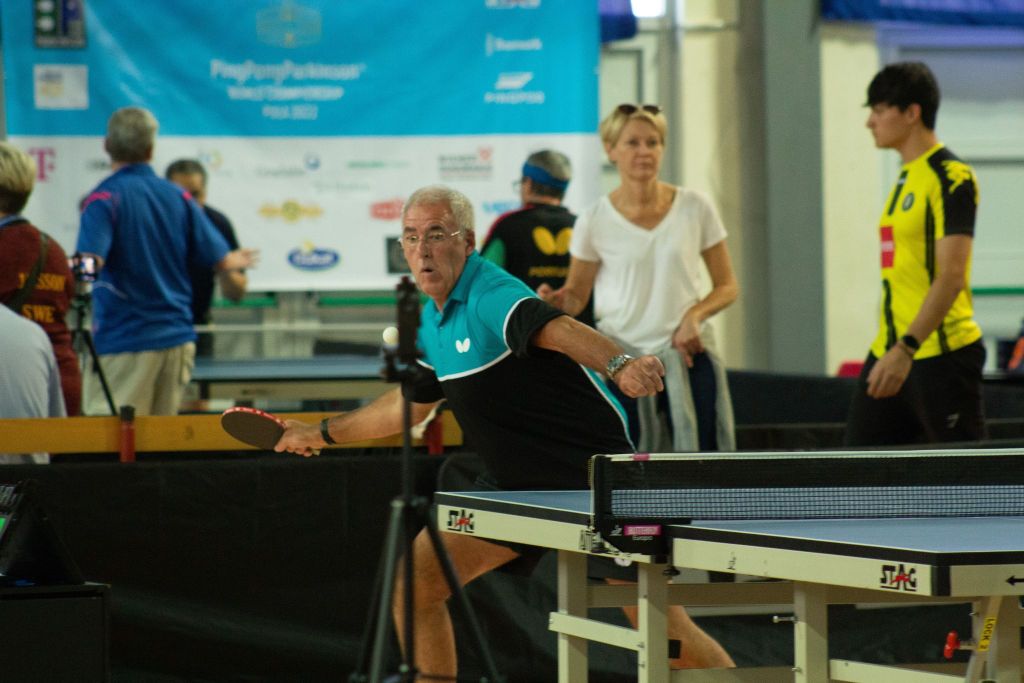
Thirty minutes later I played in the quarter final against a Danish player. He was very experienced and very fast. The first game was very tight but he won it. He seemed to move up a gear in the next two games and I was unable to stay with him in both games ending up with a 0-3 result. The end of my singles competition.
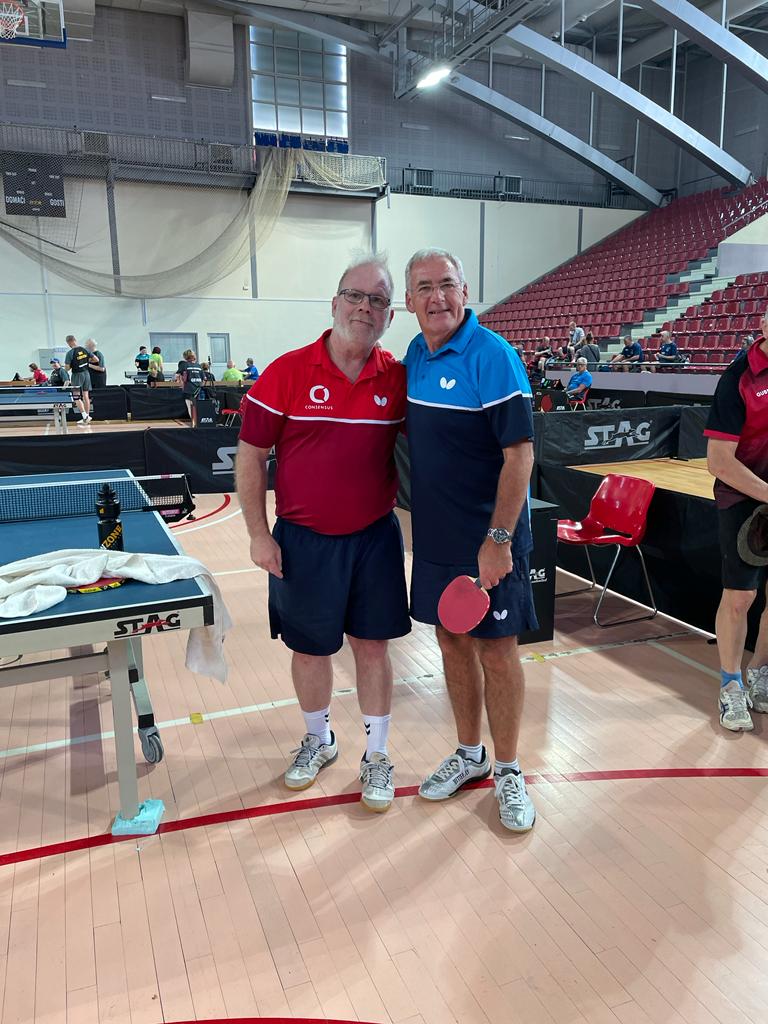
Overall very pleased with my performance in the singles and reaching the quarter finals, last eight in Class 2 of the Parkinson’s World Championships.
Later in the afternoon Christoph Freyberg and I played in the consolation doubles but could not progress any further. Once again it was an absolute pleasure to play with Christoph and experience his enthusiasm and positive attitude, despite his Parkinson’s and other medical issues that he has to deal with. A true friend.
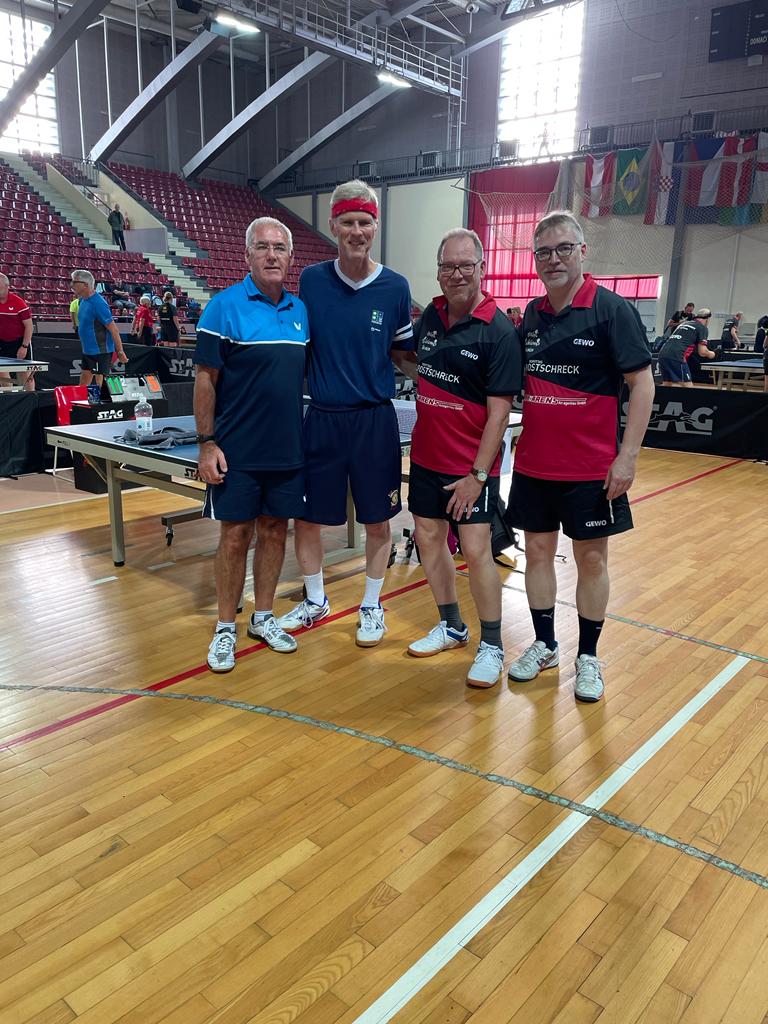
This ended my participation as a player in this years championships.
We had a social event scheduled for Saturday evening but due to poor planning / technical difficulties, this was cancelled at the last minute when we were already at the venue. As the venue was a bit remote we remained there for the evening and a few drinks with those already there.
Sunday 16th October Day 5
Although not playing I arrived early and helped some players who were scheduled to play in matches to warm up on the practice tables, doing drills, playing points, blocking etc, whatever was needed.
I then settled in to watch the semi finals and finals. I seen some great play and probably missed more, as all tables were in use constantly and there were just too many simultaneous games to keep up.
I watched a great 5 set match in the ladies doubles consolation final, won by Joy Paul and Margie Alley after a few deuces in the final set.
I also umpired the men’s singles class 2 final between Torbjorn Lidstrom (SWE) and Bjarne Taekker (DEN). Two great players I have come to know and respect at recent competitions and events. Congratulations to Bjarne who won the final.
Then on to the medal ceremony which concluded very quickly as there was an island trip planned for early afternoon for all players and there was a tight deadline.
The atmosphere, positivity and friendship around this whole event has been superb and I will miss it and all these fantastic people when it is over.
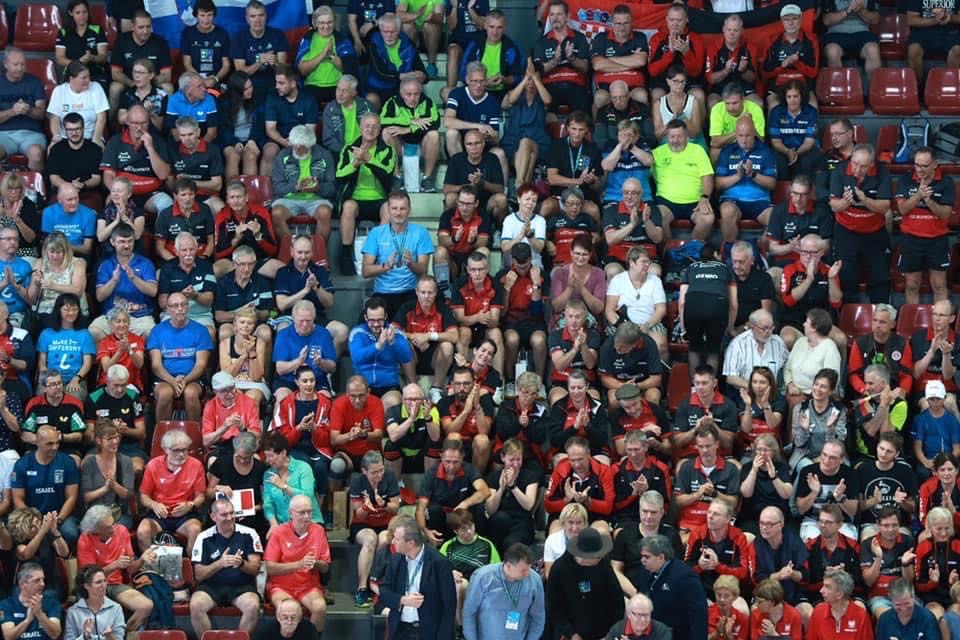
What a way to finish off my sporting year. Or is it finished? Watch this space!
This left us with Sunday afternoon and all day Monday to sightsee and relax which is exactly what we did enjoying the down time after a hectic week.
Parkinson’s Impact
I have mentioned previously the challenge of managing medication and “off” times to be as ready as possible when matches are scheduled. This was the same as always but it certainly helped that in this event days were split into segments making the timing of matches more accurate enabling adjustment of timing and doses of medication easier to plan and execute.
However there still remained the long periods of downtime followed by short bursts of activity to play matches. Taking Parkinson’s out of the equation (wouldn’t that be great) we still have to deal with the aches and pains and injuries that come with playing sport and in my case getting older! It is difficult to keep prepared through this type of competition over 5 days but we do the best we can.
I had some interesting discussions with other PWP on whether vigorous exercise changes the efficacy of Parkinson’s medication. Some say they experience no impact others say exercising appears to cause the medication to wear off much quicker. It appears there are various impacts depending on the individual, which reflects the general variations each individual experiences in terms of Parkinson’s symptoms and their effects. However this is a very short term issue for those who experience it, what is not in doubt is the long term positive benefit of regular varied exercise for PWP.

What is the future for Parkinson’s Table Tennis – Ping Pong Parkinson’s (PPP) and the International Table Tennis Federation (ITTF)
In the weeks and months prior to this event there has been a rift between PPP and ITTF. For many months we did not know if the ITTF would be involved in the event and eventually it was decided this would be a PPP only event. I am sure many of the participants were unaware of this going on in the background and like me just want to play table tennis with this fantastic Parkinson’s community.
A few days ago, during the current event, the ITTF announced the next Parkinson’s Table Tennis World Championships would take place in November 2023 in Crete, and it would be an ITTF event. I question the timing of this announcement during a Parkinson’s World Championship that the ITTF are not involved in. This appears typical of the criticism between these two organisations seen recently in correspondence and statements from both sides.
I have only recently been on the periphery of some of these statements and correspondence and do not pretend to understand the full list of issues and motivations causing this conflict between PPP and the ITTF. This has been going on since the first PPP world championship was held in 2019 in New York.
However I will pose a question to both organisations PPP and ITTF:
You both have made many statements about your commitment to table tennis for People With Parkinson’s, citing the positive impact on the players participating, including physical, mental and social benefits that help us in dealing and living with our condition. If you truly stand by these statements and are committed to continuing with TT for PWP then your priority should be enabling this for our future and working with any organisation involved that shares this goal. Why can you not work together if you share this commitment to PWP?
What next?
For me personally a few days rest and downtime, get used to the cold weather in Scotland again and decide whether to proceed with an operation for my hernia. And of course get back to playing TT before the end of the week.
Long term my TT targets for 2023 include the next World Championships, the German Open, the Japsko Altea Training Camp, a potential UK Open in Birmingham. There are also competitions in Sweden, and possibly Denmark that may be options.
This is all in addition to my role as part of the Parkinson’s Table Tennis Scotland Association, which involves trying to help and support all the new TT sessions being started for PWP in Scotland, and get more PWP playing, to experience the positive benefits while having fun playing.
End


 Batman Brian
Leave a reply to Rob Cook Cancel reply