This competition for people with Parkinson’s (PWP) took place in Bad Homburg in Germany between 27 and 29 May. This was the second time the event has taken place, the first iteration was held at Nordhorn in September 2021.
I was fortunate in being part of a small group of UK players participating this year and this blog is a short account of my experience. At the end I have included some medical testament explaining why People with Parkinson’s need to be active.
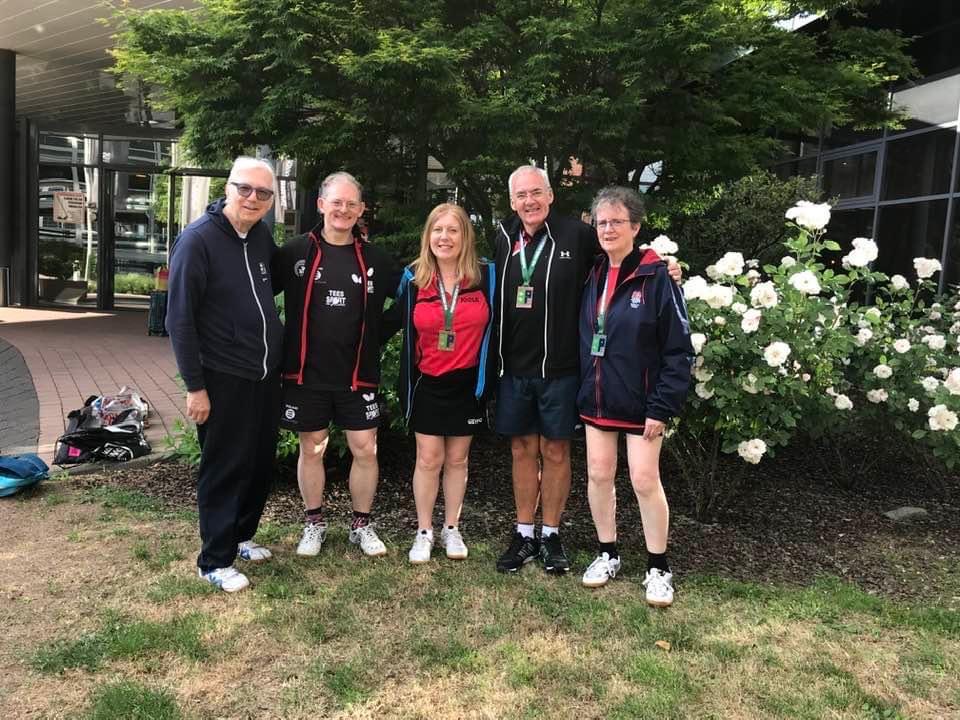
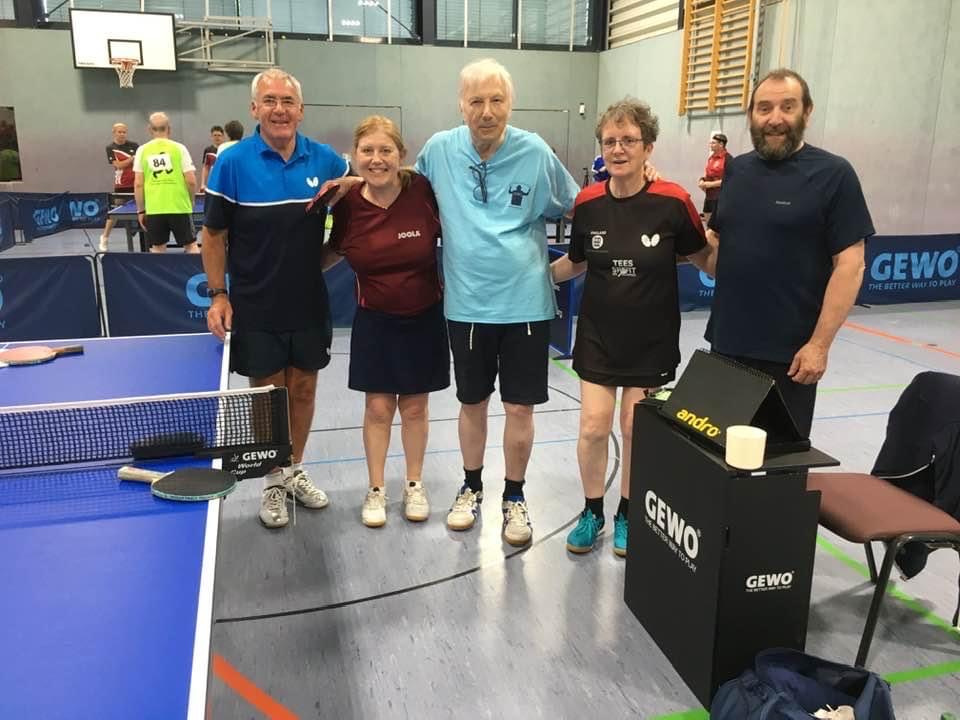
The UK players were, myself and Joy Paul from Scotland and Andrew Cassy and Liz Houghton from England
The event had 139 players taking part from 14 countries.
Travel
I was very fortunate to be travelling with fellow Scot and friend Joy Paul on this trip. I have mentioned previously the anxiety of air travel for PWP and my experience traveling alone. Having a companion for this journey made such a difference and removed a lot of the stress I felt previously. Our travel Into Frankfurt was uneventful and we arrived in Bad Homburg with no difficulty in the late afternoon.
It was great to get settled and over drinks and dinner catch up with old and new friends as the players continued to arrive and the atmosphere began to build towards the competition.
Day 2
We spent the morning walking the 5k into the centre of Bad Homburg and it was worth the effort to see at least part of this picturesque town. If our trip was a bit longer we would have included a trip to Frankfurt but this a not possible this time.
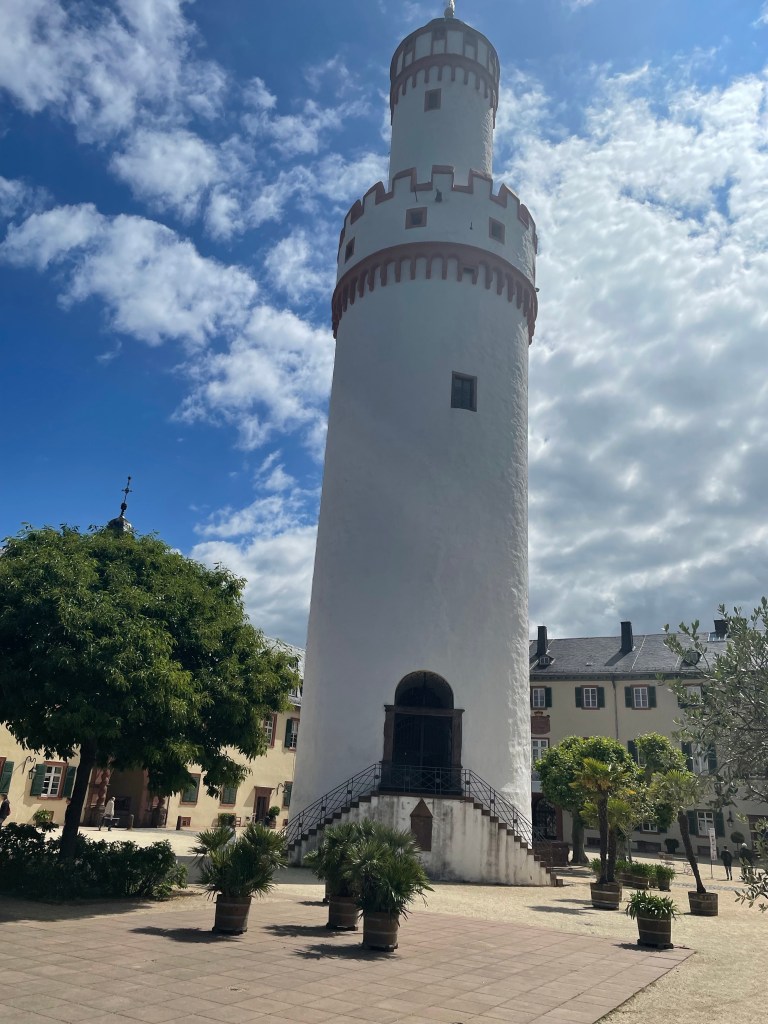
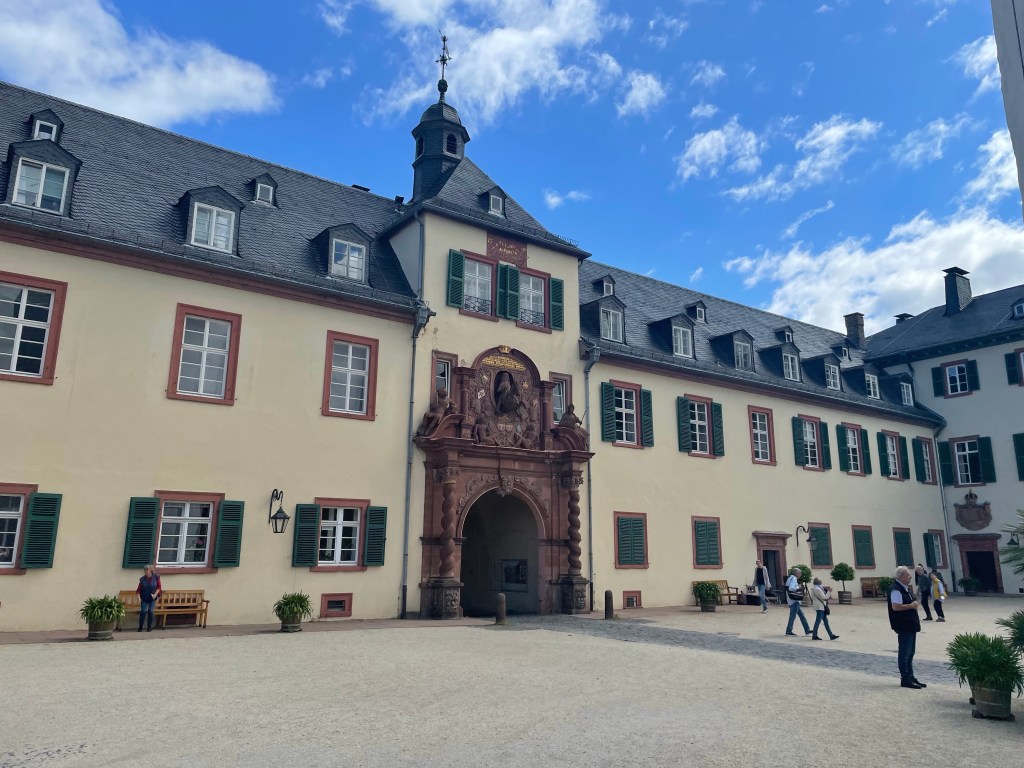
Early afternoon the organisers had a Parkinson’s “marketplace event” where various research and manufacturing bodies displayed their latest work and demonstrated progress in these areas. There were a number of exercise aids for PWP available to try out some TT related some not. An interesting session and again an opportunity for the gathered community to mix and catch up.
The day concluded with the opening ceremony followed by a buffet. At this event we heard from some local dignitaries and their commitment to the event and to supporting Parkinson’s causes. The formal part of the ceremony concluded with a brief by the tournament director on the format of the various singles and doubles competitions.
For the singles we were playing the Swiss format which was new to me and I took a while to fully understand this system. Round one involved playing 6 matches. After each match scores were reviewed to select the next opponent. Players who won their first match were paired together in match 2, players who won their first two matches were paired together in match 3 and so on. On completion players were listed in table format in order of results. The top 16 players progressed to a knockout phase, In parallel the remaining players played a consolation competition in the same format.
Consolation Rounds
Consolation rounds are a great feature of Parkinson’s competitions as they keep everyone playing and involved as long as possible. The event is about fun, networking, and social interaction as well as being a competition. Without this format it would be a less attractive event to participants some of whom have travelled far and at significant personal expense. Without consolation rounds some players would be eliminated from a three day competition in the first few hours of play on the first day.
Competition Timetable
The competition was held over three full days. There was much thought put into the timetable by the organisers to try and give players 6 hour time slots each day when their matches would be played. This prevented players (remember they are all PWP) from needing to be in the arena from first thing in the morning to well into the evening. The organisers should be commended for this and for the overall organisation and execution of the event which was first class.
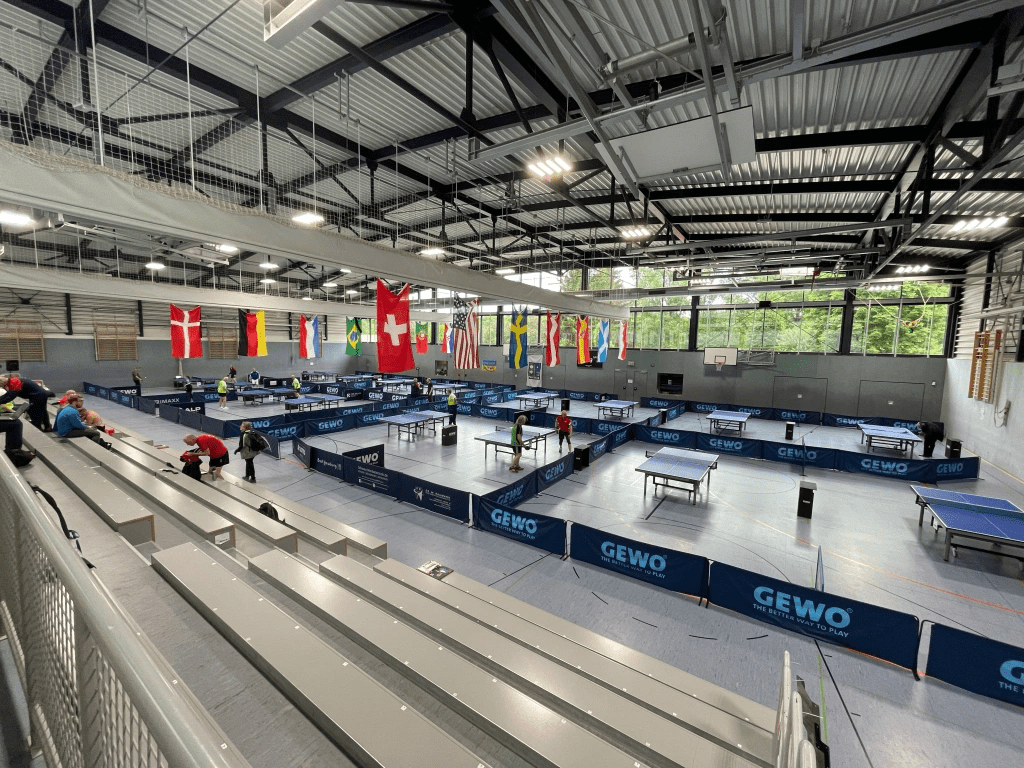
This is how the competition looked for me in terms of matches over the three days
Friday am – 6 singles matches
Saturday am – 3 mixed doubles matches
Saturday lunchtime – 3 men’s doubles matches
Saturday early afternoon – singles round of 16 knockout match
Saturday late afternoon – singles quarter final
Sunday am – 2 men’s doubles consolation matches, 2 mixed doubles consolation matches
Sunday lunchtime – singles semi final match
A very busy and exhausting three days of competition but this was my choice as I elected to play in both doubles competitions as well as the singles. Not every player chooses to do this and for some who do elect to play in all three this is sometimes not possible as there are not enough female players for every male to play in mixed doubles.
All matches were played with great spirit and everyone was enjoying the experience.
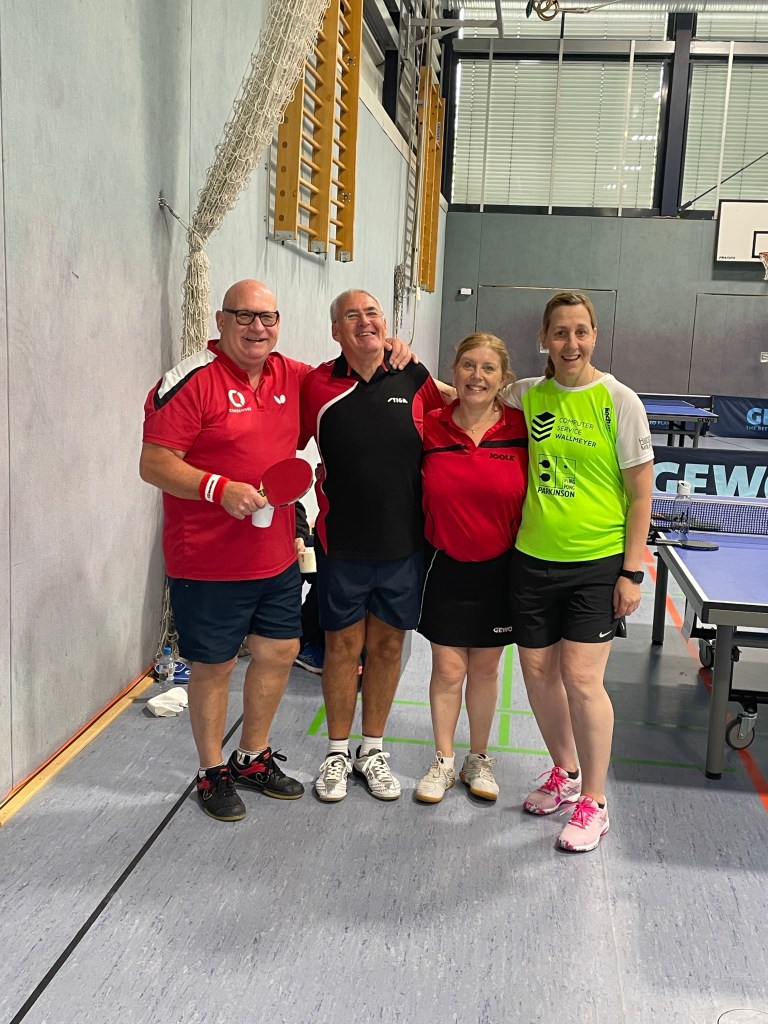
The above match was a fun experience from beginning to end as we are all friends and did not take it too seriously. Despite repeated requests from me (jokingly) to stop putting spin on the ball 😂Jesper continued to do so. At some points we just could not stop laughing and even the tournament referee was watching with a smile on his face.

Saturday Evening Event – This was dinner and drinks for all players, partners, families, officials etc at the hotel. This was another opportunity to spend time with old and new friends in a social environment where competition is forgotten and having an enjoyable experience with fellow PWP from various countries is the priority. There was some excellent entertainment provided by local school children that added to the relaxed atmosphere.
Day 6 Monday – travelled home tired but very happy.

What was the outcome of this event?
In terms of performance for the UK players, both Joy Paul and I reached semi finals in our respective singles competitions and received bronze medals. Liz Houghton reached the final in the mixed doubles and received a silver medal.
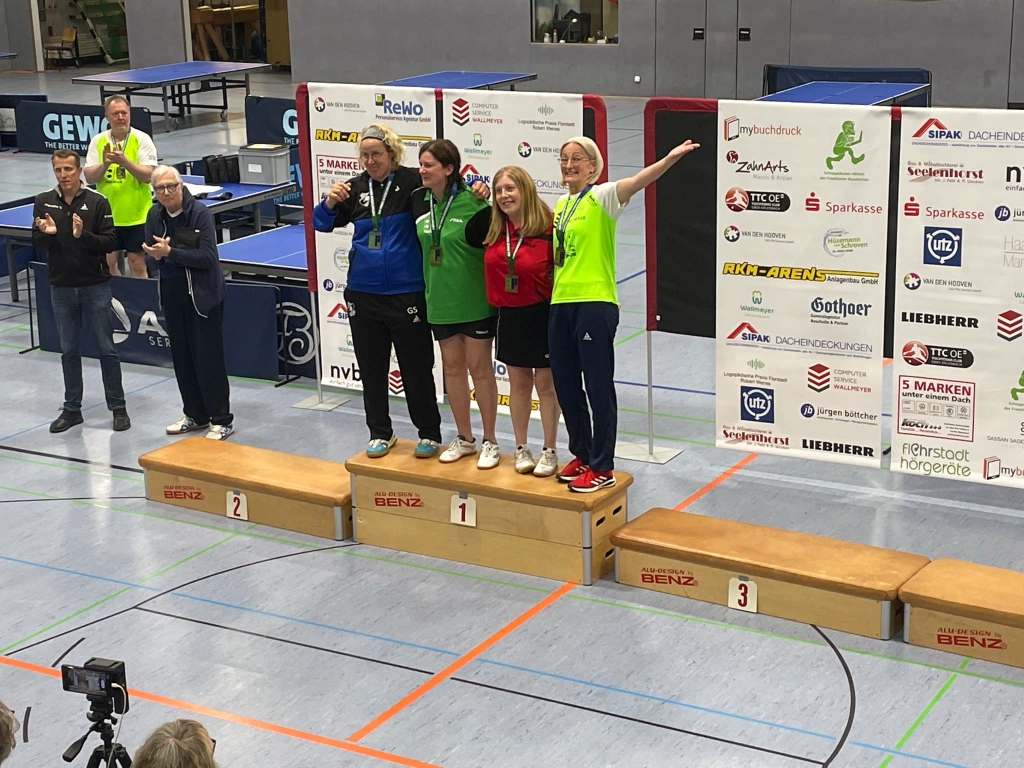

More importantly we had a fantastic experience with a group of people all dealing with an incurable degenerative disease who, through their passion for table tennis and determination to live life to the full are an absolute joy to be with. They also inspire many others that physical activity is a major part of the treatment regime for this disease
Mental and physical benefits of exercise for People with Parkinson’s
PWP have everything to win if exercise works little to lose if it doesn’t. We now know that such inactivity only accelerates the progression of Parkinson’s
Predictably, the 2020 COVID Pandemic decreased physical activity for those living with Parkinson’s, translating into more physical and mental symptoms. Subsequent research showed that many experienced “worsened symptoms . . .slowness, stiffness/rigidity, tremor, gait, freezing of gait, speech, pain, sleep disorders, concentration, feeling stressed, anxiety–depression, constipation, and forgetfulness.”
Without exercise, Parkinson’s progresses even faster. Professor Bas Bloem, Medical Director and Neurologist at the Parkinson Center, Nijmegen, Netherlands, states that “The adverse effects of inactivity include cardiovascular disease, osteoporosis, insomnia, cognitive decline, depression, constipation, and all lead to early mortality. All of these are risk factors when you have Parkinson’s, so if you are both inactive and have Parkinson’s, your risk of early mortality is higher.”
Dr. Bloem goes on to say daily exercise is critical for those living with Parkinson’s because:
- Exercise helps your heart, brain, bone density, lungs, and more.
- Exercise may prevent Parkinson’s.
- If you have Parkinson’s, exercise works like a medication. It is continually proven by research that exercise suppresses symptoms of Parkinson’s.
- It is currently believed that if anything can slow the progression of Parkinson’s, it’s regular exercise.”
That is an important distinction to understand: Those living with Parkinson’s often become discouraged at less-than-hoped-for results from regular exercise. If they aren’t experiencing results, they are likely exercising at too low of an intensity level. Unfortunately, many quit exercising because they think it’s not working. They haven’t been taught how to exercise to get their desired results.
Yes we all enjoy the social and competitive aspects of these type of competitions and find then both stimulating and enjoyable, but as you can see from the information above exercise is medicine and is critical for PWP to maintain quality of life for as long as possible while we all wait and hope for a cure to be found.

End
Brian Carson


 Batman Brian
Leave a comment